
Ohio Commercial Trucking Insurance: The Complete Startup Guide for New Trucking Companies
Starting a trucking business in Ohio is an exciting move, but before your trucks ever touch I-70, I-71, or I-75, you need the right protection in place. Ohio commercial trucking insurance is not just a box to check for compliance — it is the financial backbone that keeps a new trucking company on the road when accidents, cargo losses, or lawsuits threaten to shut you down. If you are a brand-new owner-operator or a fleet owner just getting your authority, this guide walks you through everything you need to know about getting properly covered, from state requirements to coverage types to how much you can expect to pay.
At Columbus Commercial Truck Insurance, we specialize in helping new carriers throughout Columbus and the rest of Ohio secure the right Ohio commercial trucking insurance policy from day one. We work with multiple carriers, so we can shop your risk and find coverage tailored to your operation instead of a one-size-fits-all policy.
Why Ohio Commercial Trucking Insurance Matters for New Carriers
When you are just starting out, it is tempting to view insurance as an afterthought — something you will deal with once the business is profitable. That mindset is one of the fastest ways to lose a trucking company before it ever gets off the ground. Ohio commercial trucking insurance protects your business, your equipment, and your livelihood from the very first mile you drive.
New trucking companies face a unique set of risks. You are learning your lanes, learning your customers, and learning how to run a business all at the same time. A single at-fault accident without proper Ohio commercial trucking insurance could mean six or seven figures in liability exposure, a lawsuit that follows you personally, or a suspended DOT authority that stops your revenue overnight. The right policy transforms these worst-case scenarios into manageable, covered events instead of business-ending disasters.
Beyond protection, Ohio commercial trucking insurance is also a legal requirement. Whether you are hauling locally within Franklin County or running interstate loads out of Columbus, both Ohio and federal regulators require minimum levels of liability coverage before you can legally operate. Without valid coverage on file, your DOT number can be flagged, your operating authority can be revoked, and you simply cannot get loads from brokers or shippers who require proof of coverage.
Ohio DOT and Federal Insurance Requirements for New Trucking Companies
Before your trucks can legally roll, new carriers need to understand the regulatory side of Ohio commercial trucking insurance. Depending on how you operate, your requirements will differ slightly.
Intrastate carriers operating only within Ohio must meet the Public Utilities Commission of Ohio (PUCO) minimum liability requirements, which are generally lower than federal minimums but still substantial. Interstate carriers, meaning any company crossing state lines, fall under the Federal Motor Carrier Safety Administration (FMCSA) and must meet federal minimums, which vary based on cargo type:
- General freight: $750,000 in combined single-limit liability coverage
- Household goods and oil: $1,000,000 in liability coverage
- Hazardous materials: $5,000,000 in liability coverage
New trucking companies also need to be aware of a few filings that go hand-in-hand with Ohio commercial trucking insurance:
- BOC-3 Filing: Designates process agents in every state you operate in
- MCS-90 Endorsement: A federally required endorsement added to your Ohio commercial trucking insurance policy that guarantees payment to injured third parties, even if your policy has exclusions
- Form E (Ohio): Required for intrastate carriers to prove financial responsibility to PUCO
Because these filings must be submitted directly by your insurance provider, working with an agency experienced in Ohio commercial trucking insurance saves new owner-operators from costly delays or rejected authority applications. At Columbus Commercial Truck Insurance, we handle these filings as part of setting up your policy, so you are not left guessing which forms you need.
Core Coverage Types Included in Ohio Commercial Trucking Insurance
A complete Ohio commercial trucking insurance policy is rarely just one type of coverage. Most new trucking companies need a combination of the following, depending on the type of freight they haul and how their authority is structured.
Commercial Auto Liability
This is the foundation of every Ohio commercial trucking insurance package. It covers bodily injury and property damage you cause to others in an at-fault accident. This is the coverage required by both PUCO and FMCSA, and it is non-negotiable for any new carrier applying for authority.
Motor Carrier / Primary Liability
For companies operating under their own authority, motor carrier insurance is a core piece of Ohio commercial trucking insurance that satisfies federal filing requirements and protects the business itself, not just the driver.
Physical Damage Coverage
Comprehensive and collision coverage protects your truck and trailer from theft, fire, vandalism, and collision damage. New owner-operators who have just financed their first truck should treat this as an essential part of their trucking insurance program, since a lender will almost always require it anyway.
Motor Truck Cargo Insurance
If you are hauling freight for someone else, cargo insurance protects the goods inside your trailer. Shippers and brokers routinely require proof of cargo coverage before they will tender a load, making it a near-universal component of Ohio commercial trucking insurance for anyone hauling for hire.
General Liability
While auto liability covers accidents involving your vehicle, general liability covers incidents that happen off the road, such as a slip-and-fall at a loading dock. Many contracts and warehouses will not let your drivers on-site without it.
Non-Trucking Liability (Bobtail Coverage)
For owner-operators leased onto a motor carrier, non-trucking liability covers you when you are driving the truck for personal reasons or between dispatches, outside the scope of the carrier’s policy.
Trailer Interchange Coverage
If you regularly pick up or drop off trailers that belong to someone else, this coverage protects those trailers while they are in your possession — an important add-on for many trucking insurance policies involving intermodal or drayage work.
Workers’ Compensation
If you have employees, even one, Ohio requires workers’ compensation coverage through the Ohio Bureau of Workers’ Compensation (BWC). This is a separate but often bundled piece of a growing carrier’s insurance program.
Specialty Coverage for Different Types of Ohio Trucking Operations
Not every trucking company looks the same, and Ohio commercial trucking insurance should reflect the specific equipment and freight you run. New companies often assume a generic policy will cover them, but specialty operations carry unique risks that require tailored coverage.
- Dump truck insurance for companies hauling gravel, sand, and construction materials, where rollover and jobsite exposure is higher
- Flatbed trucking insurance for open-deck freight like steel, lumber, and machinery, which faces load securement and weather exposure
- Box truck insurance for local and regional delivery operations running 16’–26′ straight trucks
- Tow truck insurance with on-hook and garagekeeper’s coverage for roadside assistance operators
- Fuel hauler insurance with high liability limits and pollution coverage for petroleum transport
- Garbage truck insurance for waste collection fleets running dense urban routes
- Hot shot insurance for owner-operators running time-sensitive loads with pickups and gooseneck trailers
- Tractor trailer insurance for long-haul and regional carriers running standard 53′ dry vans and reefers
Whatever your niche, a well-structured policy should be built around the specific risks of your equipment and freight, not a generic template pulled off the shelf.
What Factors Affect the Cost of Ohio Commercial Trucking Insurance?
New trucking companies always ask the same question first: how much does Ohio commercial trucking insurance actually cost? The honest answer is that it depends on several factors unique to your operation. Understanding these variables helps you budget realistically and shows underwriters that you are running a serious, safety-conscious business.
- Years in business / experience: Brand-new authorities typically see higher premiums until they establish a safety record. This is one of the biggest cost drivers for new trucking companies.
- Radius of operation: Local Columbus routes generally cost less to insure than long-haul interstate runs.
- Type of freight: Hauling hazardous materials or high-value cargo raises premiums compared to general dry van freight.
- Driver history: Clean MVRs (Motor Vehicle Records) and CDL experience lower your insurance costs significantly.
- Equipment age and value: Newer trucks cost more to physically insure but may qualify for better safety-related discounts.
- Coverage limits and deductibles: Higher liability limits and lower deductibles increase premium, while adjusting these can help new companies manage cash flow.
- Safety and compliance record: A clean CSA score and safety program can meaningfully reduce your premium over time.
Because so many variables affect pricing, the best way for a new trucking company to get an accurate number is to request quotes from an agency that shops multiple carriers rather than relying on a single insurer’s rate.
How New Trucking Companies Can Get Ohio Commercial Trucking Insurance
If you are just starting your trucking business, here is a straightforward path to securing the right Ohio commercial trucking insurance before your first load.
Step 1: Get Your Authority in Order
Before shopping for coverage, make sure your DOT number, MC number, and any required PUCO registration are set up. Insurers will need this information to write your policy.
Step 2: Determine Your Coverage Needs
Think through what you will actually be hauling, where you will operate, and whether you will have employees. This shapes which combination of coverage types your policy should include.
Step 3: Work With an Agency That Shops Multiple Carriers
New authorities are considered higher risk by some insurers, so working with an independent agency that has access to multiple markets gives you the best shot at competitive pricing, rather than being stuck with whatever one carrier offers.
Step 4: Provide Accurate Information
Be upfront about your experience, your equipment, and your intended operations. Underwriters reward transparency, and accurate applications lead to smoother claims later if you ever need to use your policy.
Step 5: Review Filings and Documentation
Make sure your agency handles your BOC-3, MCS-90, and any Ohio-specific filings as part of setting up your policy, so there are no gaps between your authority approval and your active coverage.
Step 6: Keep Your Certificate of Insurance Accessible
Brokers and shippers will frequently request a Certificate of Insurance (COI) before tendering loads. Many agencies, including ours, offer instant COI access so new carriers are never stuck waiting on a callback to prove their coverage is active.
Common Mistakes New Trucking Companies Make With Insurance
After helping countless new owner-operators and small fleets across Columbus and Ohio get set up, a few recurring mistakes tend to show up:
- Underinsuring to save money upfront. Choosing state-minimum coverage can leave you exposed to devastating out-of-pocket liability after a serious accident.
- Letting coverage lapse. A gap in your policy, even for a few days, can trigger a hold on your DOT authority and spike your future premiums.
- Not disclosing all drivers or vehicles. Leaving equipment or drivers off your policy can result in denied claims exactly when you need coverage most.
- Ignoring specialty coverage needs. Hauling dump loads, fuel, or hazardous materials without the right endorsements leaves major gaps in protection.
- Shopping on price alone. The cheapest quote is not always the best value if claims handling and coverage limits are weak.
- Waiting until the last minute. New carriers who wait until days before their first load to secure coverage often end up with fewer carrier options and higher rates.
Why Ohio-Based New Carriers Choose a Local Columbus Agency
New trucking companies benefit enormously from working with an agency that understands Ohio’s specific regulatory environment. A national call center may not know the difference between PUCO’s intrastate requirements and FMCSA’s interstate minimums, but a local Columbus agency lives and breathes Ohio commercial trucking insurance every day.
At Columbus Commercial Truck Insurance, located at 175 S 3rd St, Suite 1420, Columbus, OH 43215, our team works with multiple major carriers to shop your risk and build a policy suited to your business, not a generic package. We are available around the clock, and we can set you up with instant Certificate of Insurance access so you are never held up trying to prove your coverage is active. Whether you run a single truck under your own authority or you are building out a small fleet, our team has the industry expertise to make sure you have exactly the coverage your operation needs — nothing more, nothing less.
Frequently Asked Questions About Ohio Commercial Trucking Insurance
Do I need Ohio commercial trucking insurance if I only drive intrastate? Yes. Even if you never leave Ohio, PUCO requires proof of financial responsibility through Form E, which is filed by your insurer as part of your policy.
How fast can a new company get Ohio commercial trucking insurance? Many new carriers can bind coverage within a day or two once their authority information and application details are submitted, though it is best to start the process a few weeks before your planned launch date.
What is the minimum liability coverage required in Ohio? Minimums vary by cargo type and whether you operate intrastate or interstate, ranging from $750,000 for general freight up to $5,000,000 for hazardous materials under federal rules.
Can I get Ohio commercial trucking insurance with no prior trucking experience? Yes, though new-to-industry drivers may see higher premiums initially. Working with an agency that shops multiple carriers helps new operators find the most competitive options available.
Does Ohio commercial trucking insurance cover cargo I’m hauling for a broker? Only if motor truck cargo coverage is included in your policy. Most brokers require proof of cargo insurance before tendering loads, so this should be part of your coverage from day one.
Ohio Roads, Weather, and Traffic: Risk Factors New Carriers Should Know
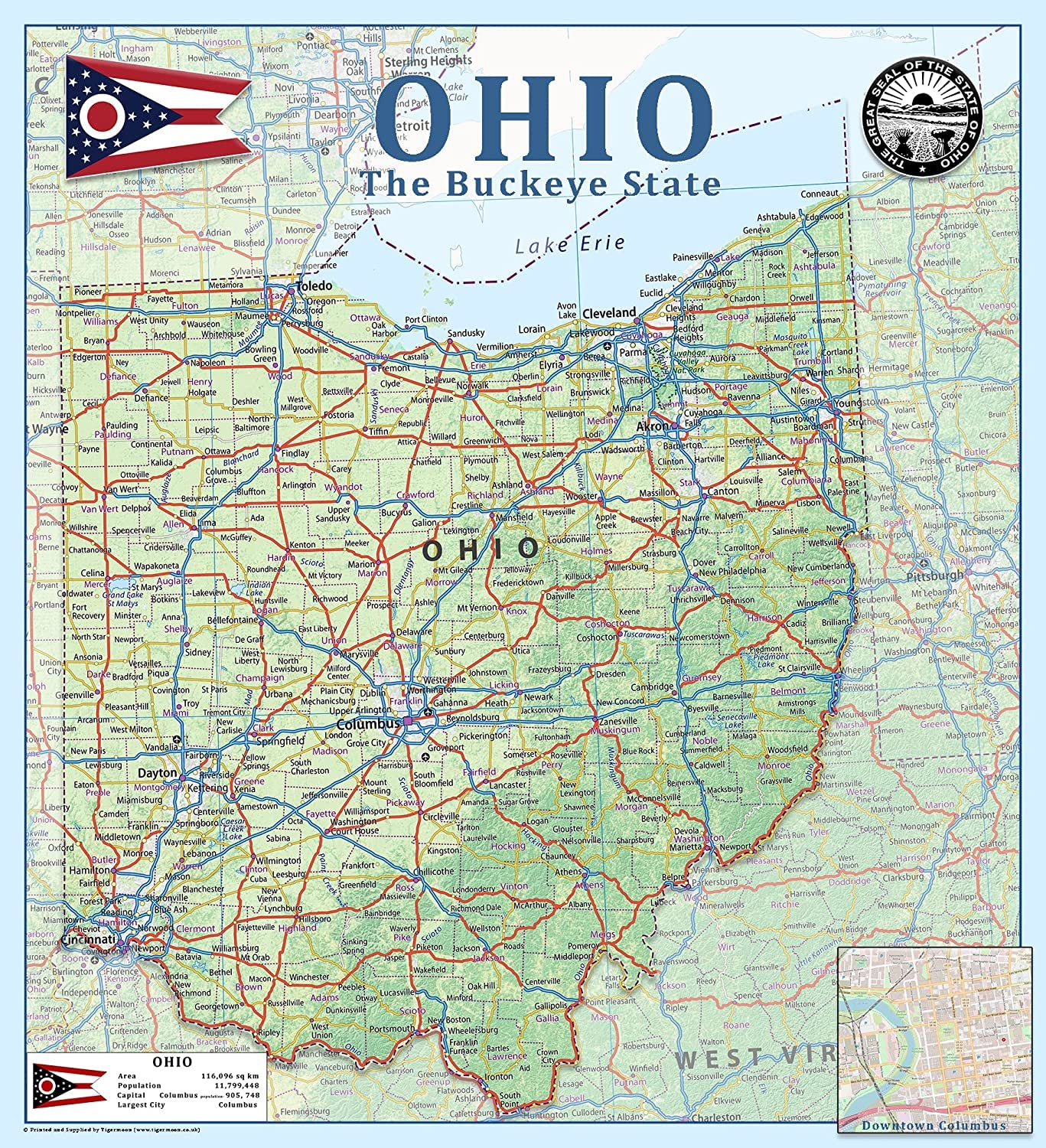
Part of building a smart coverage plan is understanding the environment you will actually be driving in. Ohio sits at the crossroads of several major freight corridors, including I-70, I-71, I-75, I-77, and I-80/90, which makes the state a hub for both local and long-haul freight. That heavy traffic volume brings opportunity for new carriers, but it also brings exposure that underwriters pay close attention to when pricing a policy.
Winter weather is one of the biggest seasonal risk factors for new trucking companies based in Ohio. Lake-effect snow near Cleveland and Toledo, combined with icy conditions statewide from November through March, increases the likelihood of weather-related accidents. New drivers should factor winter driving training into their safety program, since a strong safety record helps keep future premiums manageable.
Construction zones are another year-round hazard. ODOT’s ongoing road improvement program means lane closures and reduced speed limits are common on interstates through Columbus, Cincinnati, and Dayton. Work-zone accidents often carry higher liability exposure due to road crews and slow-moving traffic.
Urban density also plays a role. Columbus, Cleveland, Cincinnati, and Akron all have congested downtown corridors where delivery trucks, box trucks, and tow trucks navigate tight streets and heavy pedestrian traffic. Carriers running local routes through these cities should expect underwriters to weigh this congestion when calculating premiums.
Building a Safety Program as a New Trucking Company
Insurers increasingly reward carriers who can demonstrate a real commitment to safety, even in their first year of operation. New companies do not need a large safety department to make a strong impression on underwriters. A few practical steps can make a meaningful difference:
- Driver qualification files. Keep organized records of licenses, medical certificates, and MVR checks for every driver, even if you only have one truck.
- Pre- and post-trip inspection habits. Consistent inspection routines catch mechanical issues before they become accidents, and they demonstrate compliance during roadside audits.
- Electronic logging and hours-of-service compliance. Staying within federal hours-of-service limits reduces fatigue-related accident risk and keeps your CSA score clean.
- Dashcams and telematics. Many carriers now install dash cameras or telematics systems, which can help resolve liability disputes quickly and may qualify your business for premium discounts.
- Written safety policies. Even a simple one-page safety policy covering speed, following distance, and phone use shows underwriters your company takes risk seriously from day one.
Building these habits early not only protects your business physically, it also builds a track record that pays off in lower renewal premiums down the road.
What to Expect During Your First Renewal Period
Many new owner-operators do not realize that their very first policy renewal is often the most important pricing event of their early business. Insurers use your first six to twelve months of claims history, safety performance, and operational consistency to reassess your risk profile. Carriers who avoid claims, maintain a clean CSA score, and keep accurate records typically see more competitive renewal offers, while those with frequent claims or compliance violations may see premiums rise or find fewer carriers willing to offer terms.
This is another reason it pays to work with an agency that stays engaged after your policy is bound, rather than one that disappears after the sale. A good agency will proactively review your account before renewal, shop your risk across multiple markets again, and make sure your coverage still matches your operation as it grows and changes.
Get Started With Ohio Commercial Trucking Insurance Today
Launching a new trucking company is a major undertaking, and the right Ohio commercial trucking insurance policy gives you the foundation to grow with confidence instead of worrying about what happens after the first accident, cargo claim, or compliance review. From DOT filings to specialty coverage for dump trucks, flatbeds, tow trucks, and tractor-trailers, having a knowledgeable partner in your corner makes all the difference.
Columbus Commercial Truck Insurance has helped new owner-operators and growing fleets throughout Ohio get properly protected from their very first mile. If you are ready to get a quote or simply have questions about what Ohio commercial trucking insurance you need to get started, call us today at (614) 587-3031 or request an online quote. Our team is here to work for you, every mile of the way.operators secure the right this trucking coverage and get on the road with confidence. Call (602) 848-7422 or request an online quote to get started today.
