
Oversized and Overweight Insurance in Columbus, Ohio: What Every Trucking Company Needs to Know
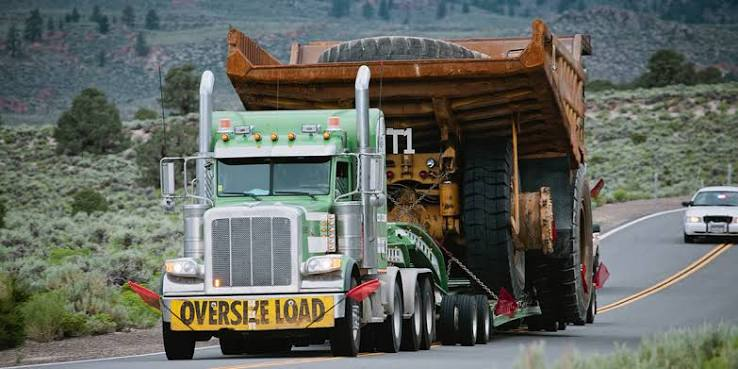
Columbus, Ohio is in the middle of one of the biggest infrastructure booms the Midwest has seen in decades. Between the Intel semiconductor project in New Albany, the expansion along the I-70 and I-71 corridors, the freight traffic moving through Rickenbacker Inland Port, and the steady stream of construction equipment rolling down I-270, oversized and overweight loads are no longer the exception on Central Ohio roads — they are becoming the rule. If your trucking company hauls wind turbine blades, precast concrete, industrial machinery, modular buildings, or heavy construction equipment through Franklin County, you already know a standard commercial auto policy does not cut it. You need oversized and overweight insurance, and an agency that understands both the freight and the local roads it travels on.
At Columbus Commercial Truck Insurance, we work with owner-operators and fleet managers across Ohio every day who move loads that exceed standard legal dimensions or weight limits. This guide walks through everything a Columbus-area trucking business should understand about oversized and overweight insurance — what it covers, why it costs what it does, how Ohio permitting rules affect your policy, and how to find coverage that actually protects your business instead of leaving gaps you discover only after an accident.
What Is Oversized and Overweight Insurance?
Oversized and overweight insurance is a specialized form of commercial trucking coverage built for loads that exceed the standard legal limits for length, width, height, or weight on public roads. In Ohio, a load is generally considered oversized once it surpasses 8.5 feet in width, 13.5 feet in height, or 53 feet in trailer length, and it is considered overweight once gross vehicle weight exceeds 80,000 pounds without a permit. Hauling anything beyond those thresholds requires special permits from the Ohio Department of Transportation, and in many cases it requires a specific insurance structure designed around the added risk.
Standard motor carrier policies are written with typical freight in mind — pallets, dry goods, produce, general commodities. Oversized and overweight insurance is different because it accounts for higher-value cargo, wider swing radius, escort vehicle coordination, permit compliance, and the increased likelihood of an incident when a load extends beyond a truck’s normal footprint. Without proper coverage in place, a single claim involving a superload or wide-load shipment can financially devastate an owner-operator or a small fleet.
Why Columbus Trucking Companies Need Oversized and Overweight Insurance Right Now
Central Ohio’s growth is not slowing down. The Intel project alone has pulled in a wave of subcontractors moving cranes, transformers, structural steel, and prefabricated components through New Albany and the surrounding townships. Add to that the ongoing warehouse and logistics buildout near Rickenbacker Airport, the data center construction spreading through Licking and Delaware counties, and the routine heavy-equipment moves tied to Ohio’s road and bridge projects, and you have a region where oversize freight is part of daily trucking life.
If your company operates anywhere near these corridors — Route 33, I-70, I-71, I-270, or US-23 — you are statistically far more likely to be hauling a load that requires oversized and overweight insurance than a carrier operating in a region without this kind of industrial activity. Local trucking companies that skip proper coverage are exposed in ways that go well beyond a fender bender. A dropped load on I-70 during rush hour, a bridge strike on an overpass with insufficient clearance, or a permit violation discovered during a roadside inspection can each trigger consequences that a standard policy was never built to absorb.
Columbus Commercial Truck Insurance was built for exactly this environment. We are not a national call center reading from a script — we are an Ohio-based agency that understands ODOT permitting, local escort requirements, and the specific routes our clients run every week. When you call our office, you are talking to someone who knows the difference between a Franklin County move and a statewide superload haul, and who can structure oversized and overweight insurance around the real risk your business faces.
What Does Oversized and Overweight Insurance Typically Cover?
A well-structured oversized and overweight insurance policy is built from several layers of protection, and understanding each one helps you avoid the coverage gaps that catch carriers off guard.
Primary Liability Coverage. This is the foundation of any oversized and overweight insurance policy. It protects your business if your oversized load causes bodily injury or property damage to another party — for example, if a wide load clips a passing vehicle or a piece of overhanging equipment damages a structure along the route.
Cargo Insurance for High-Value Loads. Oversized freight is frequently high-value freight — transformers, turbine components, industrial presses, modular housing units. This type of coverage needs cargo limits that actually match the replacement cost of what you are hauling, not a generic cargo limit designed for standard freight.
Physical Damage Coverage. Specialized trailers, lowboys, extendable flatbeds, and multi-axle configurations represent a significant capital investment. Your policy should include physical damage protection sized to the actual value of this equipment, since a total loss on a specialized trailer can run far higher than a standard dry van.
Pilot Car and Escort Vehicle Liability. Many oversized loads legally require escort or pilot vehicles, and coordinating those vehicles introduces additional liability exposure. Comprehensive coverage accounts for this coordination, whether the escort is subcontracted or run in-house.
Permit and Regulatory Compliance Support. While insurance itself does not issue your ODOT permits, the right carrier understands permit requirements well enough to flag gaps before they become claims — for example, confirming your policy limits meet what a given state or route requires for a superload move.
General Liability and Umbrella Options. For carriers regularly moving through congested urban corridors like downtown Columbus or high-traffic interchanges, an umbrella layer added to your policy provides an extra buffer above your primary limits, which many shippers and general contractors now require by contract before they will book your services.
The Types of Loads Columbus Carriers Are Hauling Right Now
Walk the yard of any heavy-haul trucking company in Central Ohio and you will see a snapshot of everything the region is building. Wind farm developers moving through rural Ohio counties need carriers who can move 150-foot turbine blades down two-lane highways before reaching I-70. Precast concrete producers supplying the Intel campus and surrounding logistics parks need trailers capable of handling beams and panels that stretch well beyond standard length. Utility contractors upgrading substations across Franklin, Delaware, and Licking counties need carriers who can move transformers weighing well over 100,000 pounds without damaging roadways or triggering a bridge posting violation.
Modular building components are another growing category. As Central Ohio’s housing and hospitality sectors race to keep up with population growth, prefabricated sections are increasingly trucked in from out-of-state manufacturing facilities and assembled on-site. Each section typically exceeds standard width limits and requires the same permitting and escort planning as any other oversize load. Agricultural equipment dealers throughout the region also move combines, grain carts, and other wide-load machinery seasonally, often on tight timelines tied to planting and harvest windows.
What ties all of these operations together is straightforward: every one of them needs a policy built around the actual risk of moving freight that does not fit within standard legal dimensions. A carrier hauling turbine blades faces different exposure than a carrier hauling transformers, and a carrier moving modular housing sections faces different exposure than one hauling seasonal farm equipment. A generic, one-size-fits-all commercial auto policy simply was not built with any of these operations in mind, which is exactly the gap this kind of specialized coverage is designed to close.
Ohio Permitting Rules That Affect Your Oversized and Overweight Insurance
Ohio’s permitting structure directly shapes what your policy needs to look like. The Ohio Department of Transportation issues both single-trip and annual permits depending on load frequency, and the permit category you operate under often determines the minimum liability limits your policy must carry.
Loads that qualify as superloads — generally those exceeding 16 feet in width, 16 feet in height, 150 feet in length, or 200,000 pounds — face additional scrutiny, may require engineering review of bridge routes, and almost always require higher liability limits than a standard oversize permit. If your fleet regularly moves superloads through Central Ohio, your coverage needs to be reviewed and adjusted well before you accept that kind of contract, not after a shipper asks for proof of insurance you do not have.
Route restrictions matter too. Certain bridges and overpasses throughout Franklin County have posted weight and clearance limits, and a driver who misjudges a route can trigger a claim that oversized and overweight insurance is specifically designed to absorb — but only if the policy was structured correctly from the start. This is one of the biggest reasons Columbus-area carriers work with a local agency instead of a generic online quote tool: the details of Ohio’s permitting and route restrictions are not something a national call center is going to catch.
How Much Does Oversized and Overweight Insurance Cost in Columbus, Ohio?
Pricing for oversized and overweight insurance depends on several factors, and no two Columbus-area carriers will pay exactly the same premium. The main variables insurance companies weigh include:
- The type and value of freight typically hauled
- Frequency of oversize or overweight moves versus standard freight
- Driver experience with wide-load and heavy-haul operations
- Claims history and DOT safety scores
- The specific trailer configurations used, such as lowboys, RGNs, or extendable flatbeds
- Routes typically driven, including how much time is spent on congested urban corridors versus rural highways
- Liability limits required by shippers, permits, or superload conditions
Because so many of these factors are specific to how your business operates, generic online calculators rarely produce an accurate number for oversized and overweight insurance. A carrier hauling occasional oversized agricultural equipment through rural Ohio faces a very different risk profile than a carrier running weekly superloads into the Intel construction site, even though both need the same category of coverage. Working with an agency that shops multiple carriers on your behalf — which is exactly what Columbus Commercial Truck Insurance does — is the most reliable way to find pricing that reflects your actual operation.
Common Claims That Oversized and Overweight Insurance Is Built to Handle
Understanding the kinds of incidents this coverage is designed to handle illustrates why standard commercial auto insurance falls short.
Bridge and overpass strikes. Even with careful route planning, height miscalculations happen, especially on older infrastructure throughout Central Ohio where clearance signage can be inconsistent. The right policy covers the resulting property damage and liability exposure.
Load shifting or drops on the interstate. A shift in cargo on I-70 or I-71 during a lane change can cause a chain-reaction accident involving multiple vehicles. Without adequate liability limits, a single multi-vehicle incident can exceed policy limits fast.
Escort vehicle incidents. When a pilot car is involved in a collision while escorting your load, liability questions get complicated quickly. Properly structured oversized and overweight insurance addresses how escort-related incidents are handled.
Utility line or infrastructure contact. Height-exceeding loads occasionally make contact with overhead utility lines or traffic signals, particularly in downtown Columbus and other areas with older infrastructure. These claims can be extremely expensive, which is exactly why adequate liability and property damage limits matter so much.
Permit violations discovered during inspection. An Ohio State Highway Patrol roadside inspection that reveals a permit discrepancy can halt a load and trigger fines. While oversized and overweight insurance does not eliminate the regulatory penalty, the right policy structure keeps your business protected on the liability side while the compliance issue gets resolved.
Choosing the Right Oversized and Overweight Insurance Agency in Columbus
Not every insurance agency understands heavy-haul and wide-load trucking, and that gap becomes obvious the moment a claim gets filed. When you are evaluating oversized and overweight insurance providers in the Columbus area, look for a few things:
Local knowledge of Ohio routes and permitting. An agency that understands ODOT rules, Franklin County bridge restrictions, and the realities of hauling through Central Ohio construction zones will structure your policy far more accurately than a national call center working from a generic script.
Access to multiple carriers. Because heavy-haul risk varies so much from one trucking business to the next, the strongest placements for this type of coverage come from agencies that can shop your risk across several carriers rather than pushing a single in-house product.
Fast certificate of insurance turnaround. Oversized loads are often booked on tight timelines, and a shipper or general contractor may require proof of coverage before your driver is allowed on site. An agency offering instant certificate of insurance access keeps your coverage from becoming a bottleneck on a time-sensitive job.
Claims support that understands heavy-haul freight. When a claim involves a specialized trailer or high-value cargo, generic claims handling slows everything down. Look for an agency connected to carriers experienced in oversized and overweight insurance claims specifically.
Columbus Commercial Truck Insurance was built around these exact priorities. Based at 175 S 3rd St, Suite 1420 in downtown Columbus, our team works with owner-operators and fleet managers across Ohio to structure oversized and overweight insurance that reflects the actual freight, routes, and risk our clients face every day. We shop your risk across multiple carriers, help you understand how Ohio permitting affects your coverage, and give you a direct line to a team that answers the phone — not an automated queue.
Frequently Asked Questions About Oversized and Overweight Insurance
Does my regular commercial auto policy already cover oversized loads? In most cases, no. Standard commercial auto policies are underwritten around typical freight dimensions and weight, and many exclude or severely limit coverage for loads exceeding legal size or weight thresholds. This is exactly why this type of policy exists as a distinct coverage category.
Do I need this coverage for occasional loads, or only frequent heavy-haul work? Even a single oversized or overweight move without proper coverage can create significant financial exposure. Carriers who occasionally move oversize freight still need oversized and overweight insurance in place before accepting that kind of job, even if it only happens a few times a year.
Will oversized and overweight insurance cost more than standard trucking coverage? Generally yes, because the risk profile is higher. However, the actual premium depends heavily on your specific operation, which is why working with an agency that shops multiple carriers tends to produce far better pricing than accepting the first quote from a single provider.
Does this coverage include pilot cars and escort vehicles? Depending on how the policy is structured, escort and pilot vehicle liability can be included or added as a supplemental coverage. This is a detail worth confirming directly with your agent rather than assuming it is automatically included.
How quickly can I get oversized and overweight insurance in place for a new contract? Timelines vary by carrier and the complexity of your operation, but working with a local agency that already understands Ohio permitting and heavy-haul risk generally speeds up the process significantly compared to starting from scratch with an unfamiliar provider.
Mistakes to Avoid When Insuring Oversize and Overweight Freight
Even experienced trucking businesses run into the same handful of mistakes insuring heavy-haul freight. Being aware of them before renewal can save your business a costly gap in protection.
Assuming a standard policy will simply “stretch” to cover an occasional big load. Many owner-operators only discover their existing policy excludes oversize freight after a claim has been filed. By then, it is too late to fix the gap. If oversize or overweight hauls are even an occasional part of your business, that exposure needs to be addressed proactively.
Underinsuring cargo value. Heavy-haul freight is frequently worth far more than a standard cargo limit accounts for. A single transformer can be worth hundreds of thousands of dollars, and a policy written with a generic cargo cap leaves your business exposed to the difference.
Overlooking escort vehicle liability. Pilot cars are often treated as an afterthought, yet they play a direct role in the safety of an oversize move. Confirming how escort vehicles are treated under your policy avoids confusion if an incident occurs.
Waiting until a contract is signed to secure coverage. Shippers and general contractors increasingly require proof of adequate coverage before work begins. Scrambling to bind a policy afterward puts unnecessary pressure on your timeline and your pricing.
Choosing price over expertise. The cheapest quote is not always the right quote, especially when the policy is written by an agency unfamiliar with heavy-haul risk and Ohio’s local routes. A slightly higher premium from an agency that understands your operation, your equipment, and your routes is often the better long-term value, particularly if a claim ever needs to be filed.
Avoiding these mistakes starts with working alongside an agency that treats heavy-haul freight as a specialty — exactly the role Columbus Commercial Truck Insurance plays for carriers throughout Central Ohio.
Protect Your Columbus Trucking Business With the Right Coverage
Central Ohio’s construction and logistics boom is not a temporary trend — it is reshaping how freight moves through this region for years to come. Trucking companies hauling oversized or overweight loads through Columbus, New Albany, and Rickenbacker need coverage built for that reality, not a generic policy that leaves gaps exposed the moment something goes wrong.
Columbus Commercial Truck Insurance has spent years helping Ohio owner-operators and fleet managers secure oversized and overweight insurance that matches their freight, routes, and risk. Whether you haul occasional oversize equipment or run regular superloads through Central Ohio’s industrial corridors, our team is ready to review your operation and help you find coverage that holds up when it matters most.
Call us today at (614) 587-3031 or request an online quote to get started on oversized and overweight insurance built specifically for your Columbus, Ohio trucking business.
